Modern Kitchen Undermount Sinks: Balancing Style, Function, And Cost
Are you tired of battling the grime that inevitably collects around your sink's rim? It is time to modernize your culinary workspace. A double bowl undermount kitchen sink solves this persistent cleaning issue while significantly elevating your kitchen's design. Let us explore why this architectural shift is the superior choice for your home.
The Aesthetic Impact: Why Precision Matters In Minimalist Kitchens
The primary benefit of upgrading to an undermount configuration is its ability to significantly reduce visual clutter, a cornerstone of modern minimalist design.
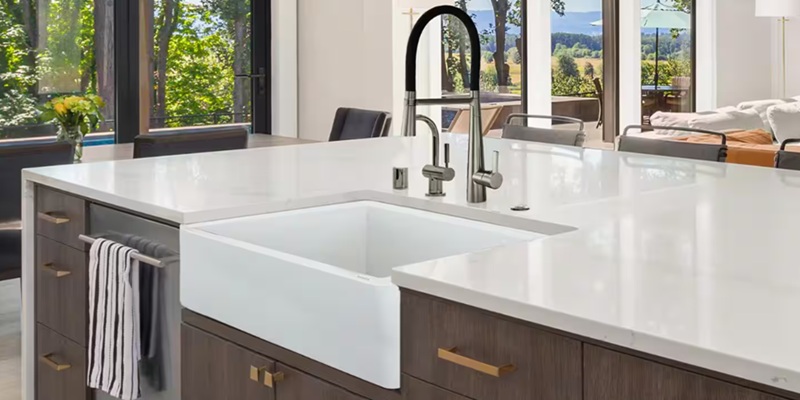
By mounting the basin directly beneath the countertop, you create a continuous, uninterrupted surface that extends seamlessly from your prep area to the basin's edge. This eliminates the bulky, obtrusive rim found in traditional setups, allowing your premium countertop material—whether veined marble, granite, or engineered quartz—to take center stage without interruption. This configuration creates a seamless transition that defines the modern dual-kitchen-sink aesthetic, making the kitchen feel significantly larger and more cohesive.
However, achieving this sophisticated look requires specific technical decisions regarding the "reveal"—the critical relationship between the countertop edge and the sink below.
A positive reveal leaves a small portion of the sink's flat rim exposed; this is often a practical choice, as it protects the fragile edge of a stone counter from chipping when washing heavy pots. Conversely, a negative reveal allows the countertop to overhang the sink slightly, completely hiding the fixture's rim for the absolute sleekest look. However, it creates a hidden lip that requires diligent cleaning to prevent mold buildup. Finally, a flush-mount aligns the sink wall and counter edge, creating a smooth, vertical drop-off.
In stark contrast to top-mount rims that sit significantly above the surface, breaking the visual plane and catching the eye, the undermount approach offers a level of sophistication that feels custom-built for luxury living. While the look is stunning, the actual value lies in how it changes your daily cleaning routine.
Undermount Vs. Drop-In: Hygiene, Maintenance, And Durability
While the aesthetic upgrade draws homeowners in, the daily utility is what keeps them there.
The functional superiority of an undermount kitchen sink configuration over a traditional double-bowl drop-in sink becomes obvious the moment you clean up after a meal. In a drop-in scenario, the elevated rim acts as a dam, trapping crumbs, liquids, and bacteria on the counter surface. You have to lift debris over the rim to dispose of it. With an undermount, you can sweep water, flour, and vegetable peelings directly into the basin without obstruction. There is no perimeter lip to catch debris, which significantly streamlines your workflow.
This difference is critical for long-term household hygiene. Industry authorities, including Consumer Reports, have noted that the exposed caulk lines and crevices in drop-in sinks can easily become breeding grounds for bacteria and black mold as the silicone seal ages and peels away. An undermount system minimizes this risk by protecting the joint beneath the countertop overhang, keeping the seal out of direct physical contact.
However, this seamlessness requires robust installation standards to ensure longevity.
Unlike a drop-in sink that hangs by its rim, an undermount sink sinks into the countertop. It relies on a combination of heavy-duty epoxy adhesive and mechanical clips drilled into the stone to ensure stability. While a bead of silicone caulking is still required for waterproofing, it is not the primary structural support and faces less physical wear than the exposed seals of top-mounts. This results in a setup that is not only cleaner but also incredibly durable when installed correctly.
The key is ensuring your installer uses the proper mounting clips rather than relying solely on glue, which can fail over time under the weight of a sink full of water and dishes. Once you have decided on the installation style, the next hurdle is choosing a material that fits your budget.
Material Analysis: Balancing Durability And Cost
Once you have committed to the sleek, hygiene-forward profile of an undermount installation, the next decision is tactile.
The material you choose will determine not only the aesthetic of your kitchen but also the longevity of your investment. According to the National Kitchen & Bath Association (NKBA) , durability remains the primary driver for kitchen upgrades, and nowhere is this more critical than the sink, which sees more active use than any other fixture in the room.
Stainless Steel: The Industrial Standard Stainless steel is the ubiquitous choice for a reason, offering the best price-to-performance ratio on the market. However, you must look beyond the shine. The industry standard differentiates steel by "gauge," which measures thickness. We strongly recommend choosing a 16-gauge model over the thinner, lower-cost 18-gauge models often found in big-box stores. The 16-gauge steel is roughly 25% thicker, making it far more dent-resistant and, crucially, significantly quieter. A thinner sink will sound tinny under the force of a high-pressure faucet; a dense, modern, double-bowl stainless steel sink will withstand heavy pot scrubbing with a solid, muted tone. Expect to invest between $200 and $600 for a high-quality 16-gauge unit utilizing 304-series steel, which contains the requisite chromium and nickel to prevent rust.
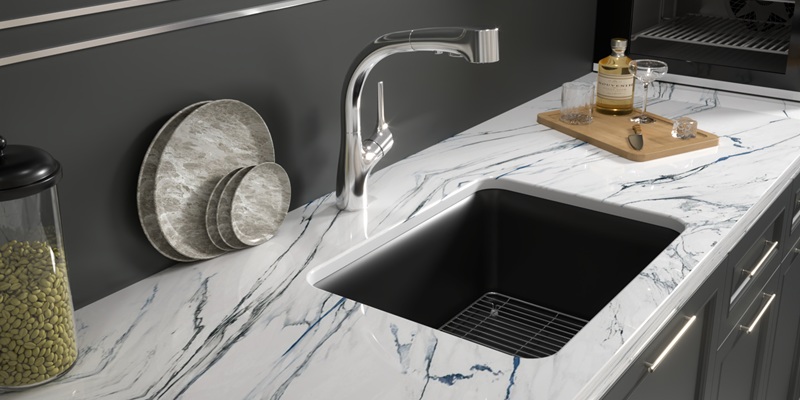
Granite Composite: The Modern Workhorse. For homeowners who find water spotting and stainless steel scratching unacceptable, granite composite is the superior alternative. Engineered from 80% crushed quartz sand and acrylic resin, these sinks are virtually scratch-resistant and can withstand heat up to 535°F. They are aesthetically distinct, offering matte finishes in charcoal, brown, or white that integrate seamlessly into modern matte-finish kitchen designs. This durability comes at a slight premium, with costs typically ranging from $300 to $800, but the material's resistance to fading and chipping often justifies the initial expense.
Fireclay: The High-End Aesthetic. At the top of the price bracket sits fireclay. Fired at temperatures exceeding 2,000°F, the glaze fuses to the clay body, creating a rigid, non-porous surface. It is the gold standard for traditional or farmhouse designs, offering a brilliant, timeless gloss. However, it is not without risk. While fireclay is generally wear-resistant, it can chip or crack if a heavy cast-iron skillet is dropped directly onto it. With prices ranging from $600 to over $1,500, this option is for those prioritizing luxury design over heavy-duty utility. Material dictates price, but your daily workflow dictates the configuration you need.
Configuration Guide: Single Vs. Deep Undermount Double Basins
The choice between a single cavernous basin and an undermount double-basin sink comes down to how you wash dishes.
If you rely heavily on a dishwasher and only hand-wash oversized roasting pans, a single bowl is often preferred. However, for the serious home cook who washes as they cook, the double-bowl setup is indispensable. It allows for a dedicated "wash" zone and a separate "rinse" or "prep" zone, preventing soapy water from contaminating fresh produce and eliminating the need to drain the sink to rinse a glass.
Manufacturers have recently addressed the limitations of double bowls with the "low divide" trend. In this design, the partition separating the bowls is only half the height of the sink walls (roughly 3 to 4 inches high). This innovative geometry provides the separation needed for multitasking while accommodating the extended handles of skillets or baking sheets that would otherwise tilt awkwardly in a standard split sink. It effectively bridges the gap between single-bowl capacity and double-bowl functionality.
Ergonomics and aesthetics meet in the discussion of depth. A deep undermount kitchen sink—typically 9 to 10 inches deep—offers a distinct visual advantage: it hides the mess. In an open-concept living space, deep bowls keep dirty dishes below the counter, out of sight of the living room or dining area. However, be mindful that excessive depth can cause back strain for taller users during prolonged use. Finding the right balance results in a contemporary dual sink that serves as a functional cleaning center without compromising the sleek lines of your countertop.
Installation Realities And Cost Breakdown
Before committing to the upgrade, you must address the structural realities of your kitchen. Unlike drop-in models, undermount sinks hang beneath the countertop and rely entirely on the countertop material for support. Consequently, this installation requires solid surfaces such as granite, marble, or engineered quartz. If you currently have laminate countertops, an undermount installation is generally not feasible because the porous particleboard core at the cut edge cannot withstand moisture or support weight.
You should also be prepared for higher labor costs. To achieve that seamless, professional finish, installers must cut and polish the countertop edges with absolute precision—a process significantly more labor-intensive than dropping a rim over a rough opening. Finally, precision planning is non-negotiable. You must measure the interior width of your cabinet base, not just the dimensions of your current basin. This ensures that a versatile, dual-mount modern sink fits within the cabinetry framework without compromising the structural integrity of the surrounding wood.
Final Thoughts: Investing In Long-Term Value
While the transition to an undermount configuration requires rigorous planning and a higher upfront investment, the long-term returns are substantial. You gain a streamlined, hygienic workspace free of crumb-catching rims, along with a sophisticated aesthetic that instantly increases your home's value. The seamless blend of high-end design and practical utility makes the effort entirely worthwhile. Now that you have the necessary technical insights, the final step is to take action. Use your tape measure to confirm your cabinet dimensions, and contact a professional today to request a quote for your new modern double-bowl kitchen sink.